
About
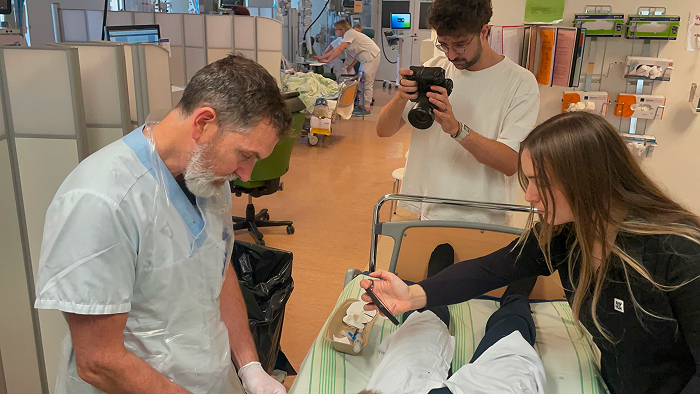
Together with Getinge, a market leader within the medical/hospital space, we set out to think about how the intensive care unit in a hospital could look like in 2035 - One of the most complex and challenging projects I've worked on to this date.
Goal
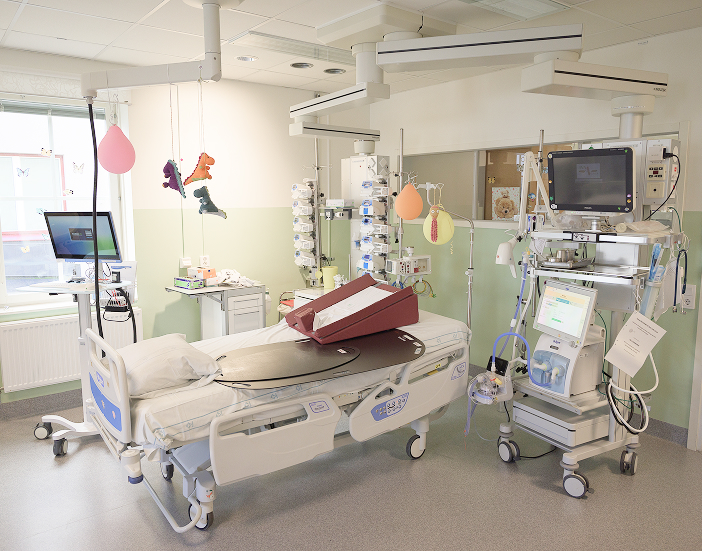
With new treatments ICU patients are less sedated and therefore more present mentally & physically. The ICU environment is not made for that, its cold, sterile and almost feels hostile - A place created purely for survival. This is a burdon not only on patients but also nurses and relatives, who often suffer from related PTSD.
So how can we create a new generation ICU that not only takes into account the new physical requirements, but also the psychological needs of all stakeholders?
Outcome
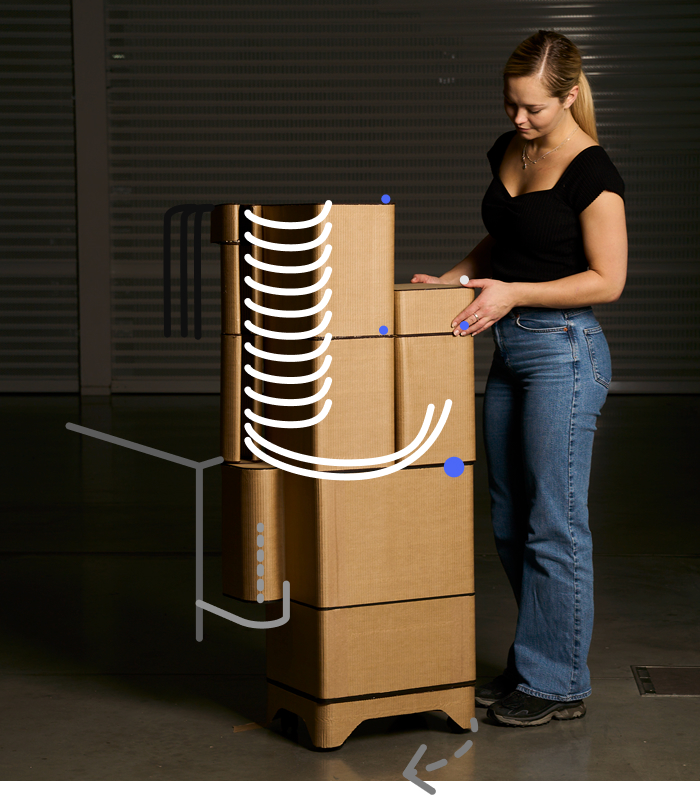
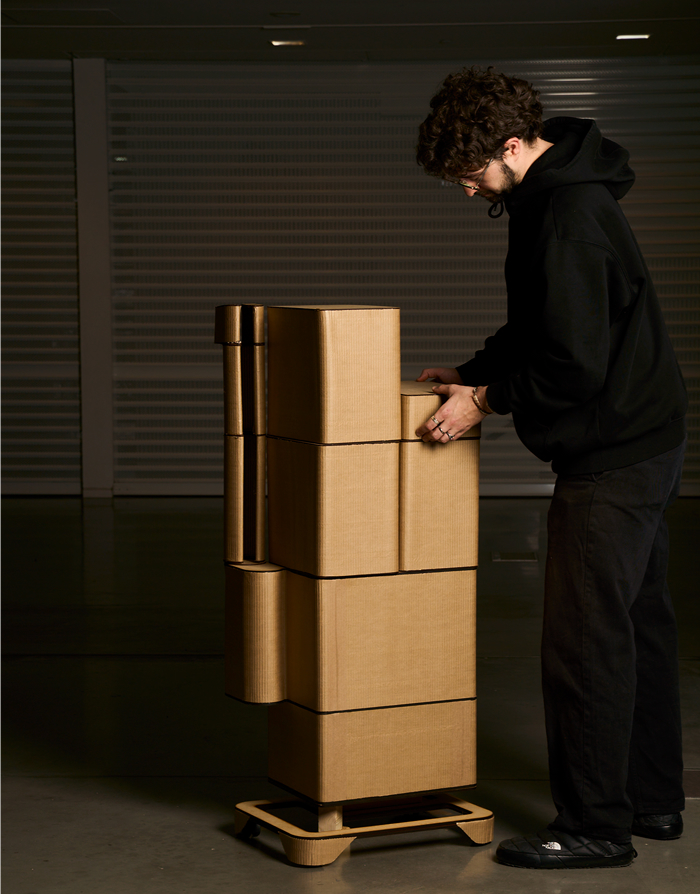
A modular hub that standardizes equipment and fades more in the background, while still keeping it accessible to nurses and doctors.
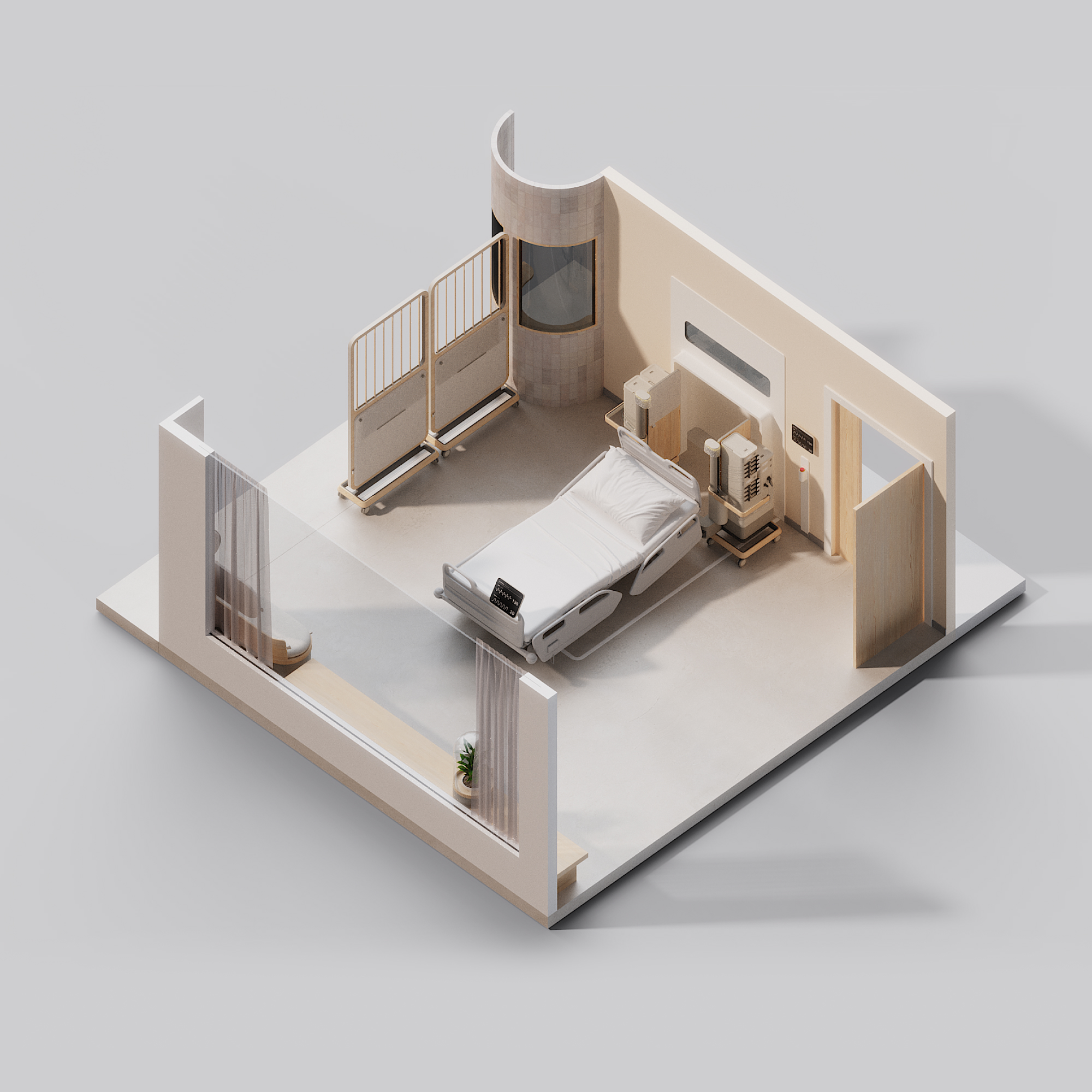
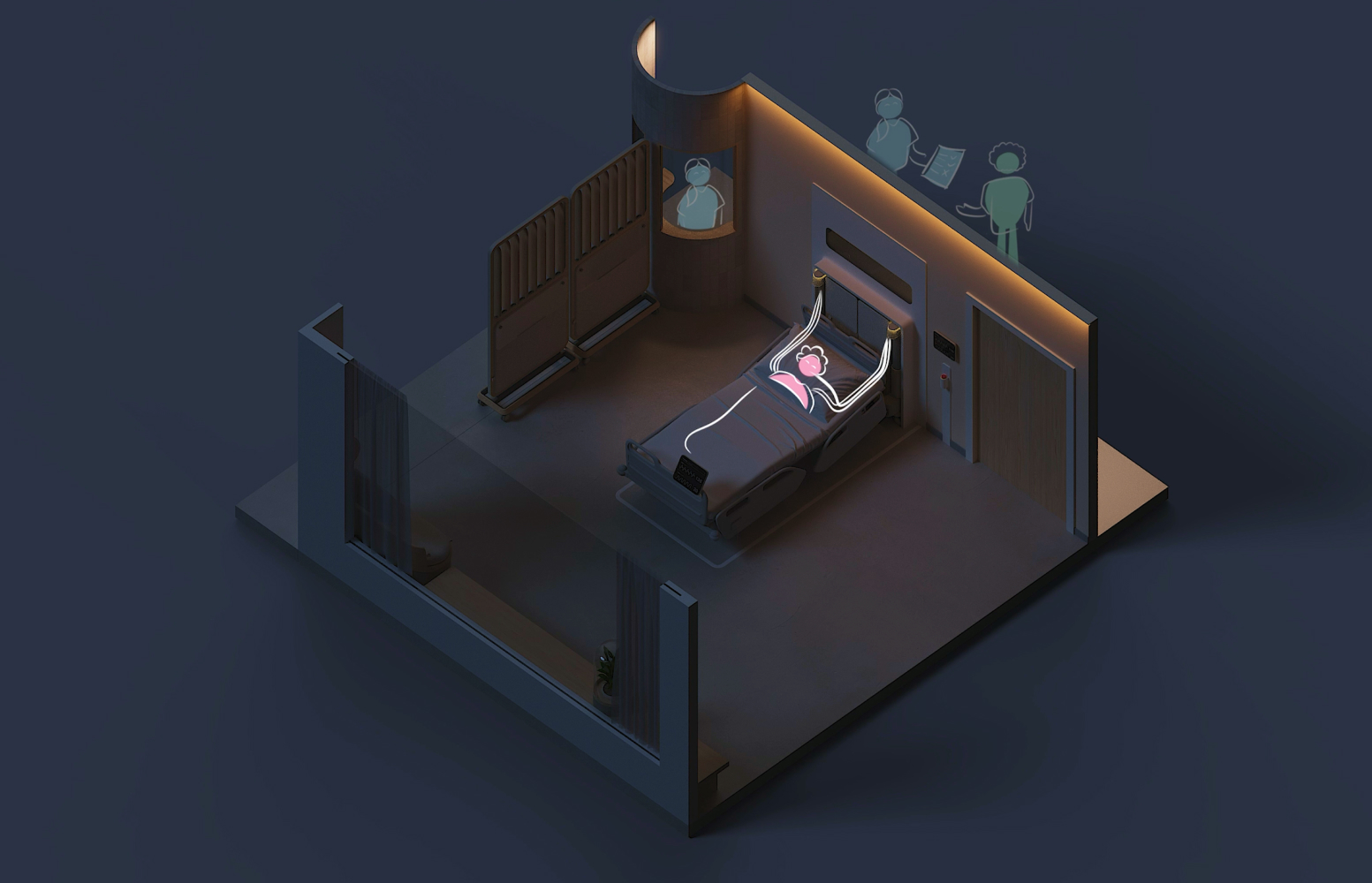
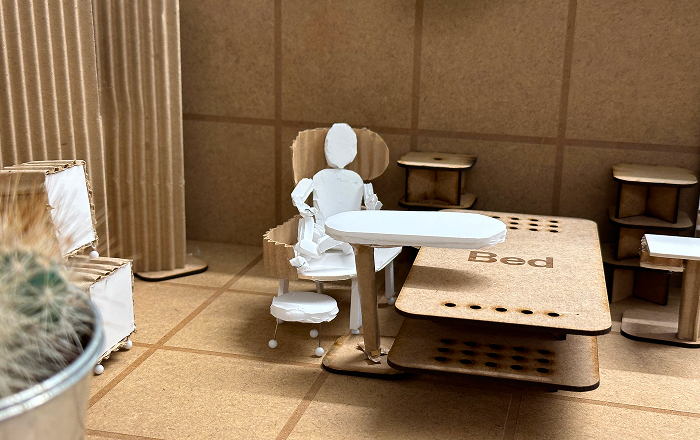
To further elevate this we created a new room layout that creates a symbiosis with the hub:
Resulting in a lot more free space, which we then used to create supporting products like specialized furniture, creating a better environment and experience for all stakeholders.
Mira - Empathic Intensive Care
10 Weeks Project
2023
Umeå Institute of Design, Sweden
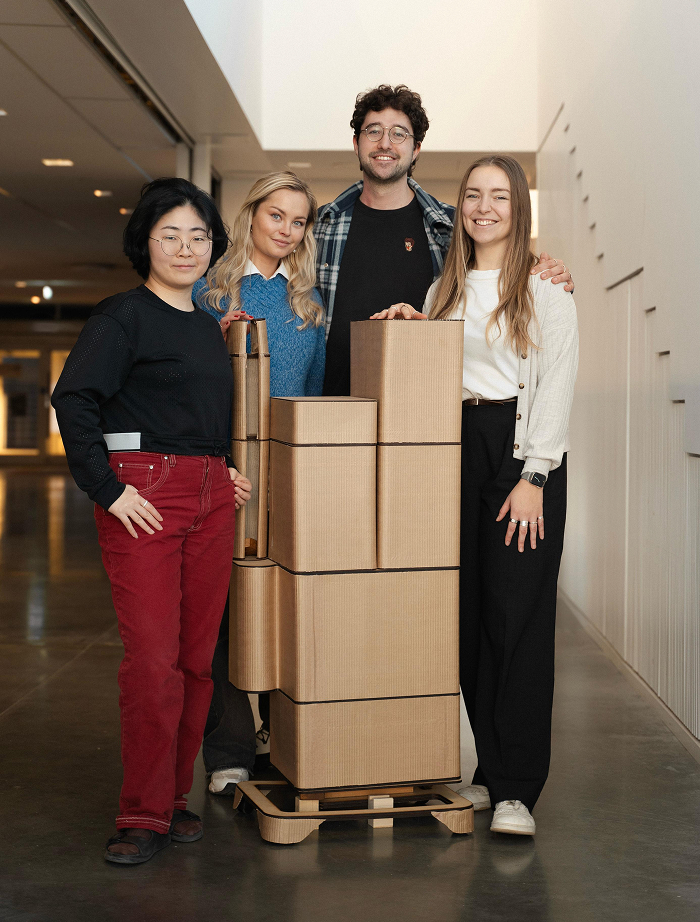
Team Project:
Frida Neckmar
Luisa Ebeling
Xiaoyu Yu
A healing environment instead of a maze of maschines!
For everyone:
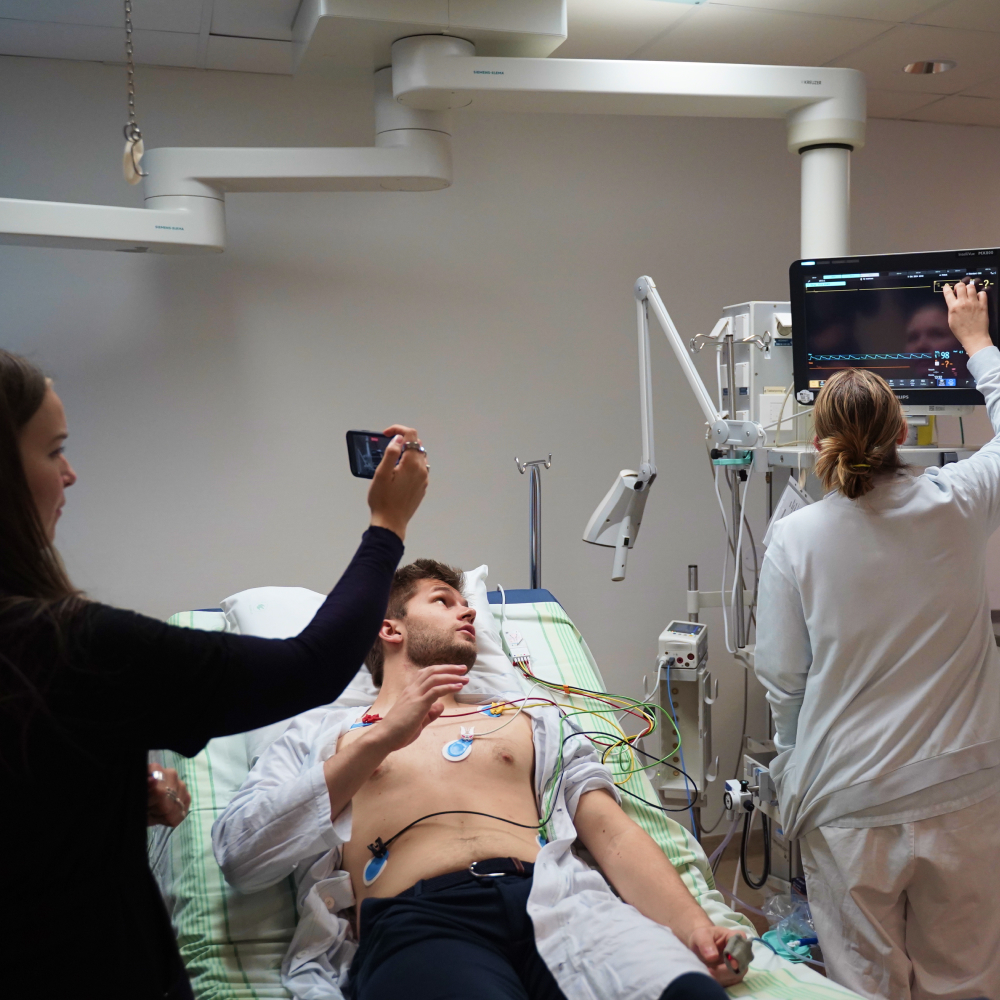
Patient
The ICU treatment hast drastically changed in the last decade, but the rooms patients survive in haven't. Two mayor things have drastically changed:
Less sedation - patients are more aware of their surroundings, while good for the recovery speed, there are also higher risks of PTSD, due to the cold environment purely focused on survival.
Early mobilisation - it's important to get people on their feet as soon as possible, but with current machines it requires up to 8 nurses to securely mobilize a patient.
Relatives & Friends
Relatives also struggle due to the before mentioned sterile and uninviting environment - one of their loved ones is fighting for their life.
Currently they can just sit there, hoping their loved one notices their presence, which often makes the relatives feel helpless. Currently in an ICU there are no concrete tasks for visitors, to help them feel more useful.
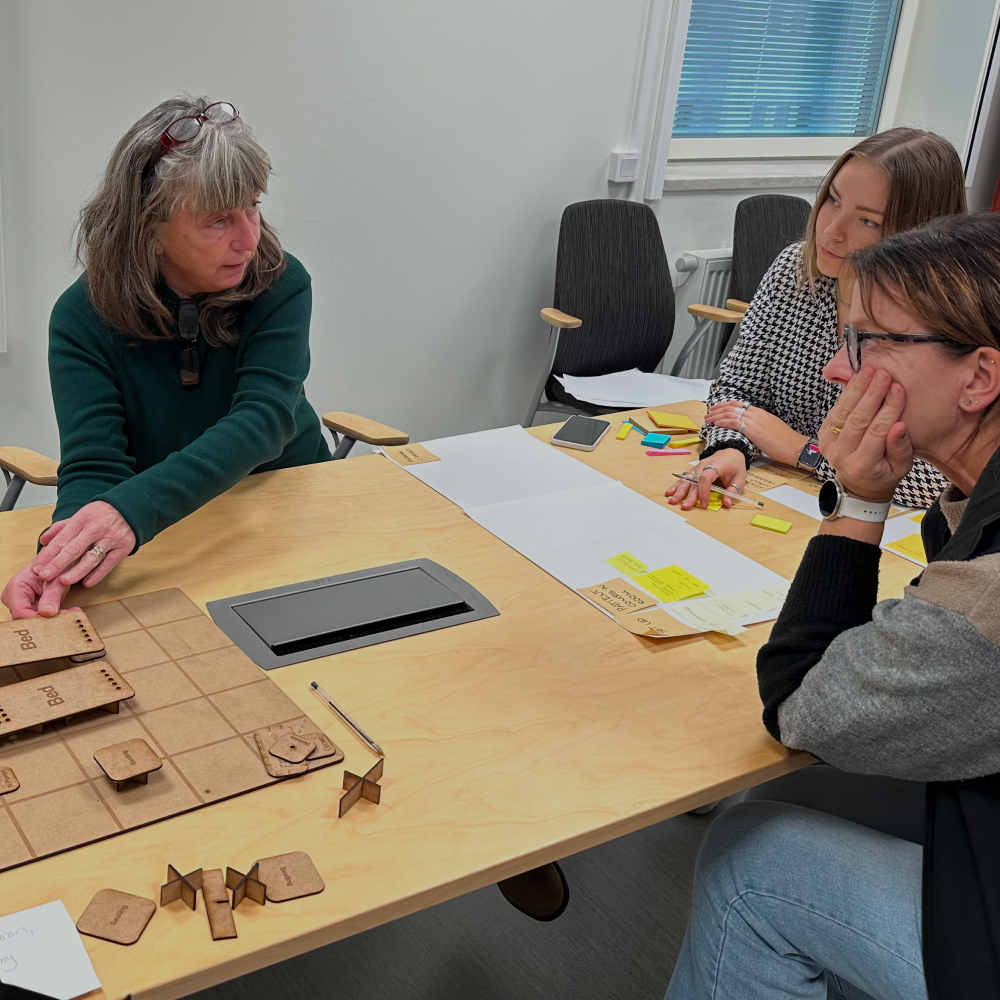
Nurses & Caretaker
This survival focused cool sterile environment also impacts the caretaker and nurses. They are even more aware of their surroundings than the patients and experience high stress, so PTSD is not uncommon.
There is also a clear scientificly proven correlation between the friendliness of
an environment and the amount of sick days nurses have.
The healing modules - A strong foundation
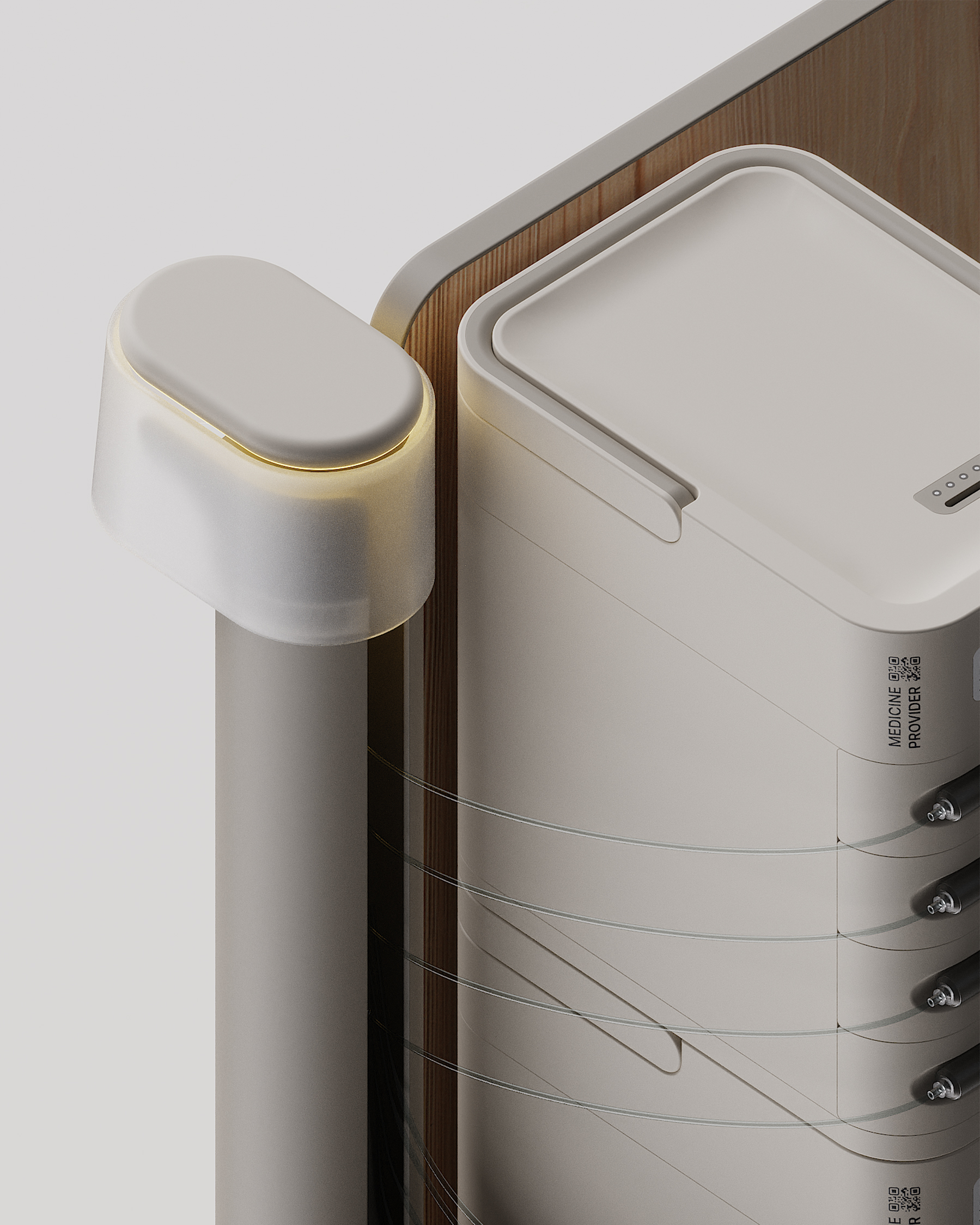
Structured Configurations
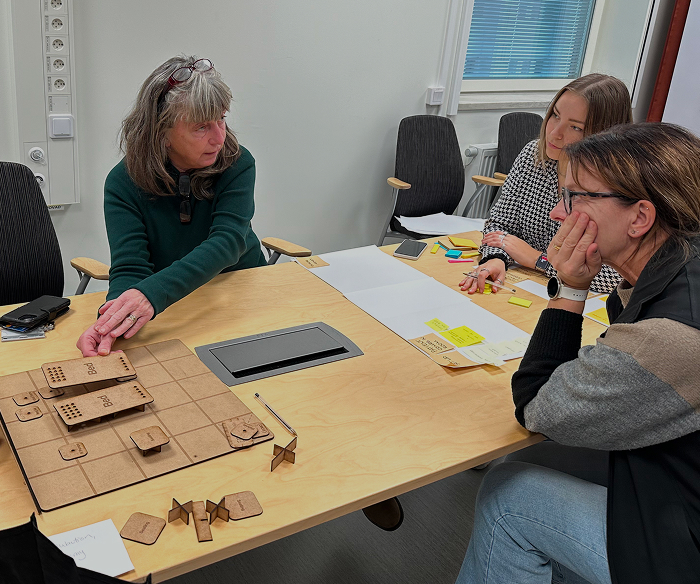
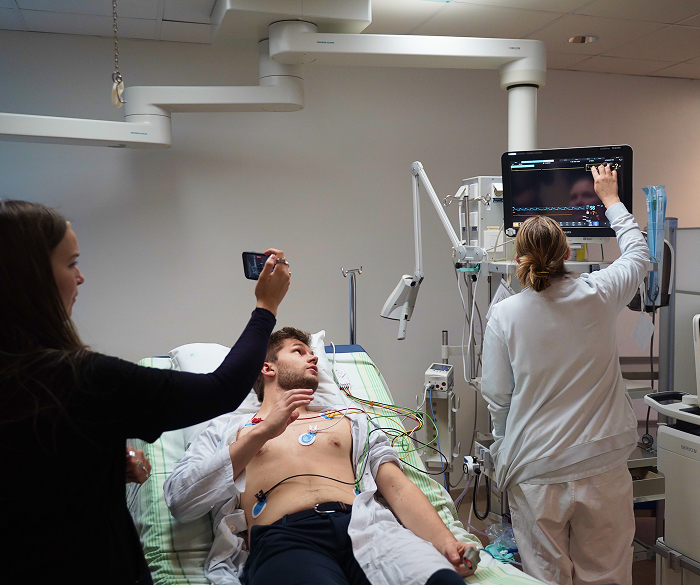
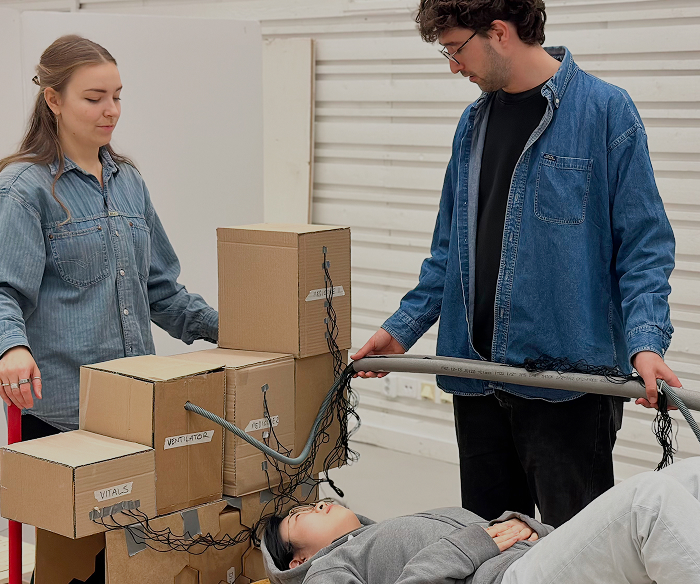
Talking to nurses showed us that every team has unique workflows and setups for their machines. Which means our goal was to stackability and standardization, without limiting the care takers freedom to arrange their tools.
Self-Explainertory Names
From interviews with relatives we know that they often not only feel helpless but also clueless. Surrounded my machines their loved ones depend on, but not idea what they actually do. So each module is labeled with an easy to understand descriptive term and a QR code for further in depth information.
The patient hub - Human needs, need space
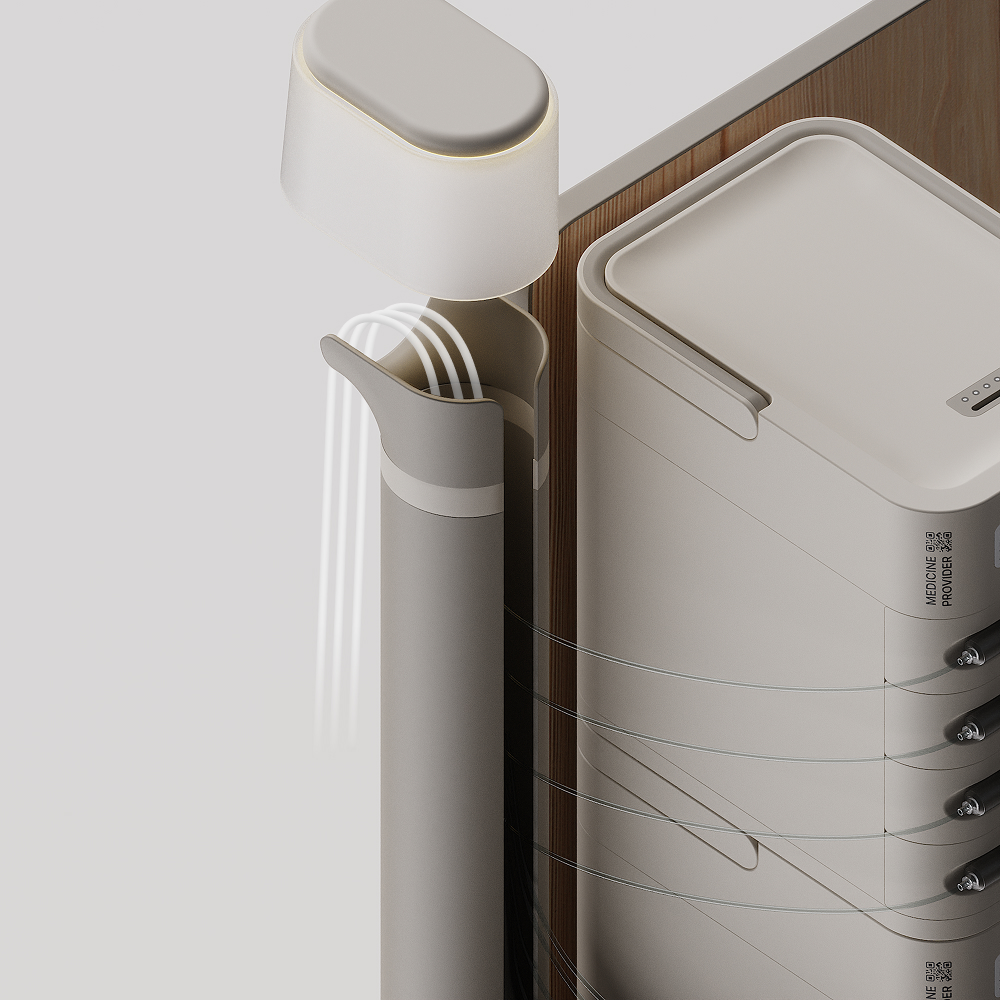
Cable Management
It might sound trivial to outsiders, but cable/tube managment is a big daily challenge for ICU nurses. It may sound brutal but it is not uncommon to trip and rip tubes out of the patient.
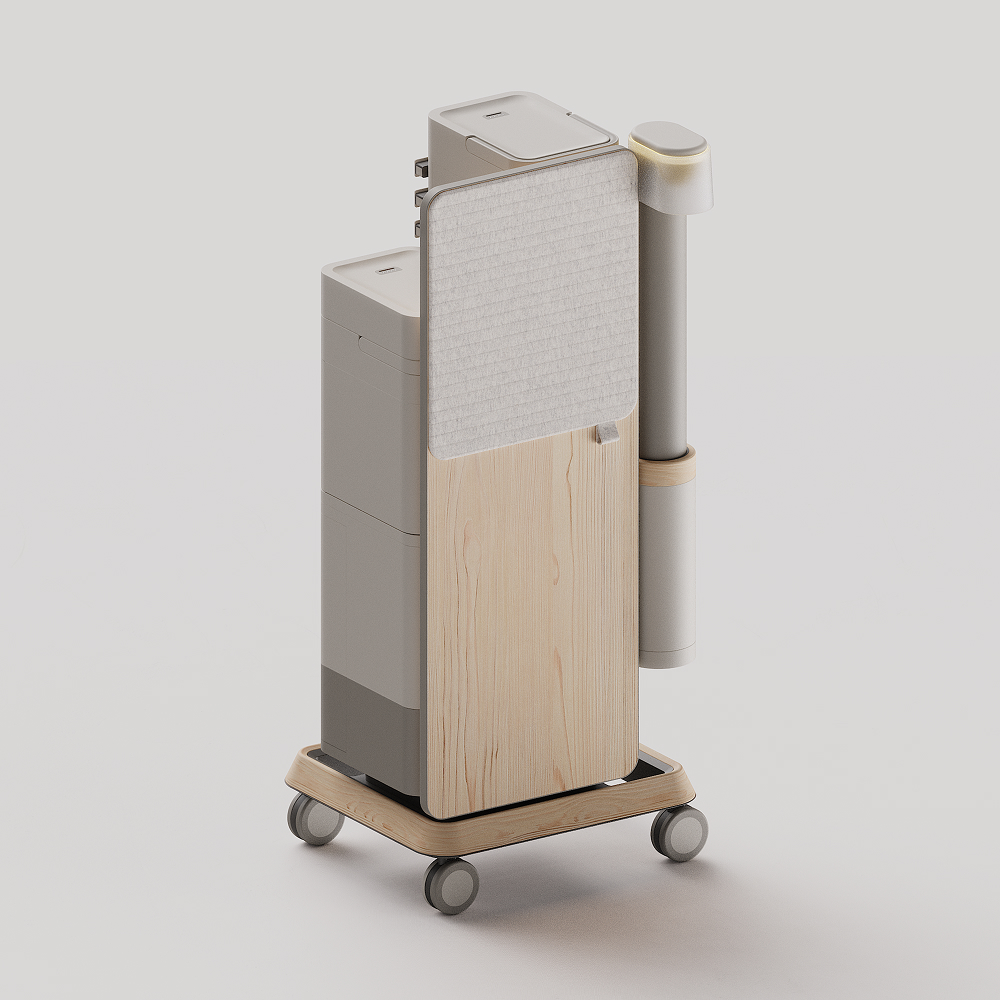
Accoustic Wall
While ICU equipment is made to be as silent as possible, moving parts will always produce noice and it quickly adds up. Our maschine hub has an accustically treated wall which always faces the patient especially at night during recovery periods.
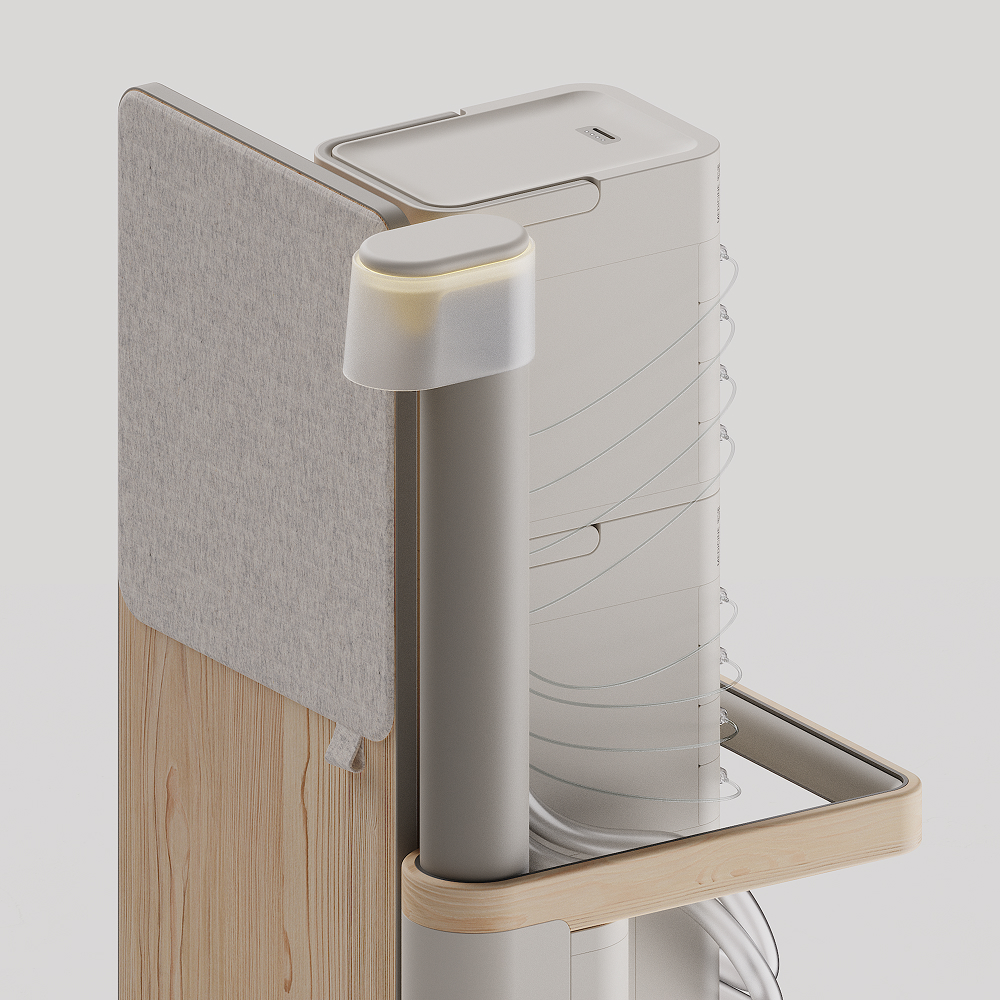
Patient Light
Any interior designer advices to not only have practical light, but also lights which create a cozy athomsphere. Our patient light can do exactly that, while also providing visual status cues to the ICU staff.
Day Mode
The patient hub is connected to the patients bed via a hinge. The hub can be folder towards the patient during the day, so the nurses can both see the patient and the maschines during the treatment.
Emergency Mode
This folding mechanism also allows to free up the headboard during an emergency, this is a mandatory requirement for life-saving measures like CPR.
Night Mode
During resting periods the patient hubs can be folded behind the headboard. Allowing full shilding of the patient from the maschine noise due to the accoustic wall in between.
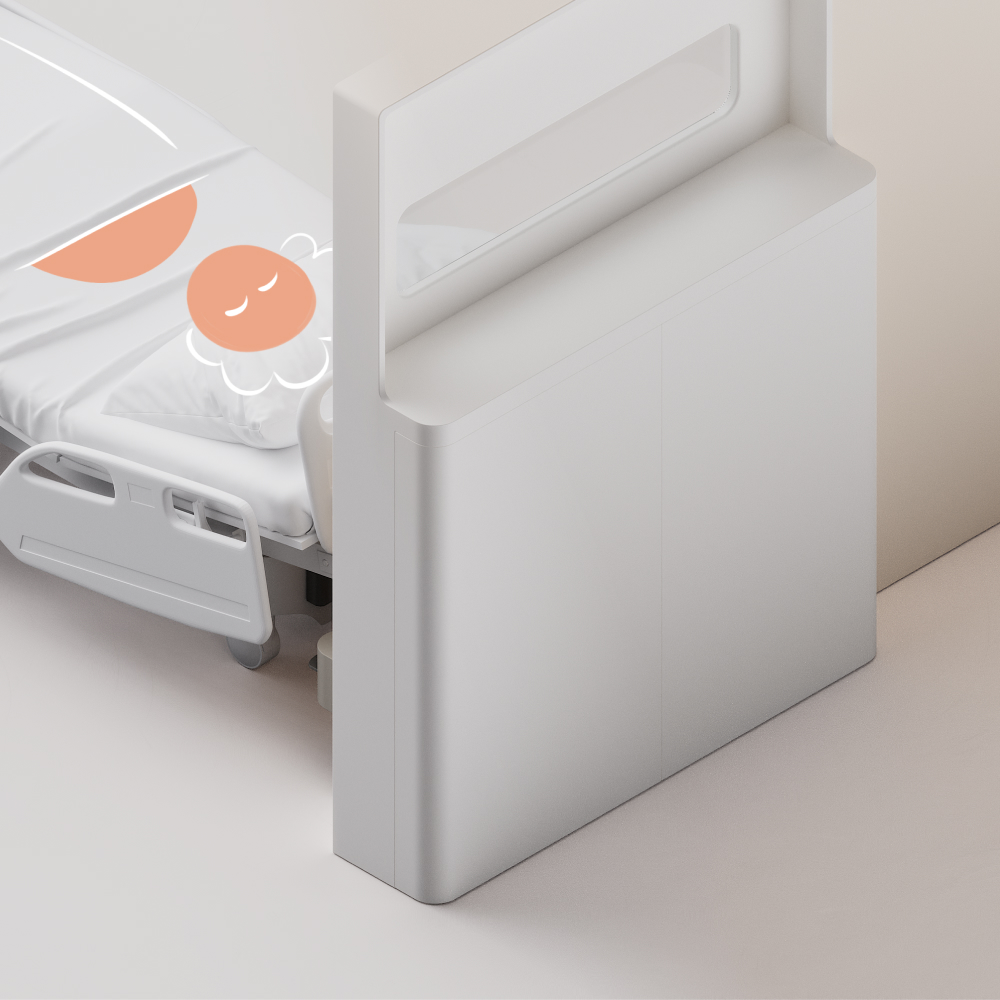
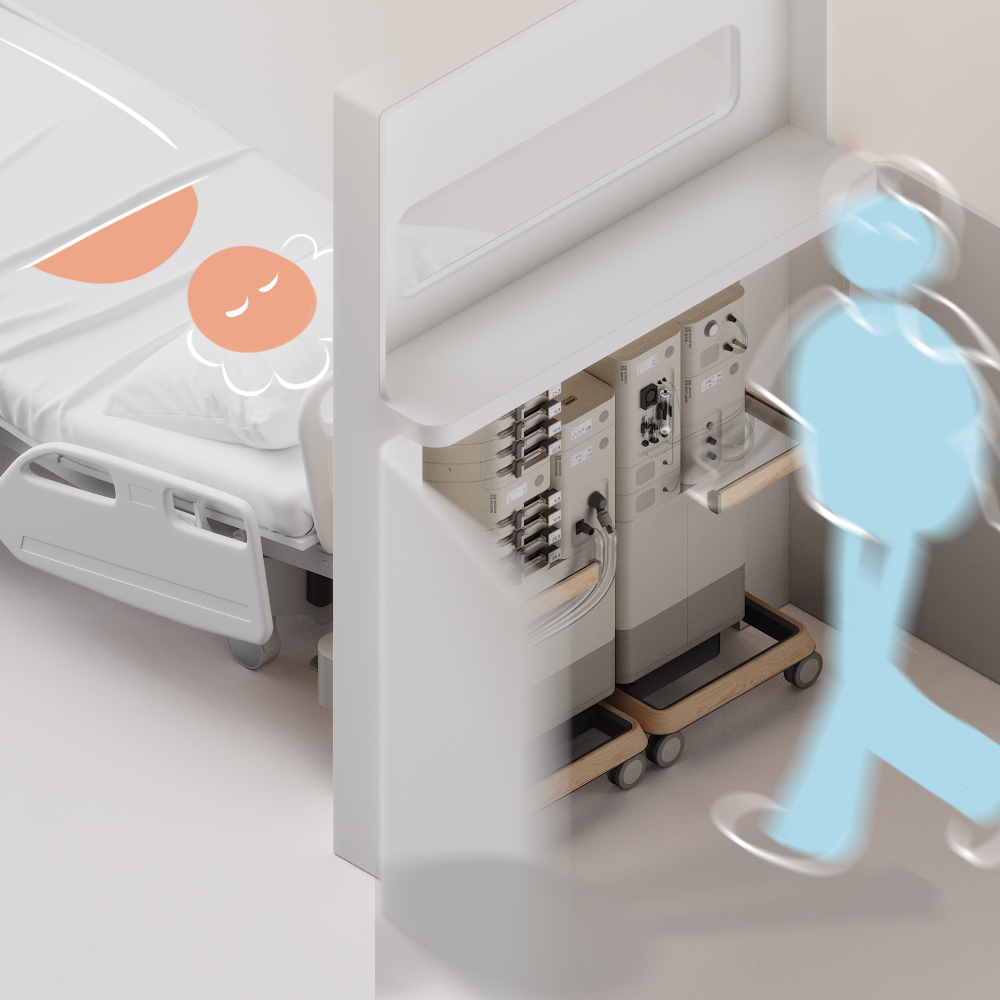
ICU maschine bay
While in night mode the whole bed can move into the enclosed maschine bay, further reducing noise for the patient.
Extended Acess
It also provides great benefits to the nurses. There is a one way mirror that allows the staff to look into the room, without needing to enter the room. This also extends to the maschines: They can be acessed and refilled from the hallway through the built-in closet.
The patient room - Healing together
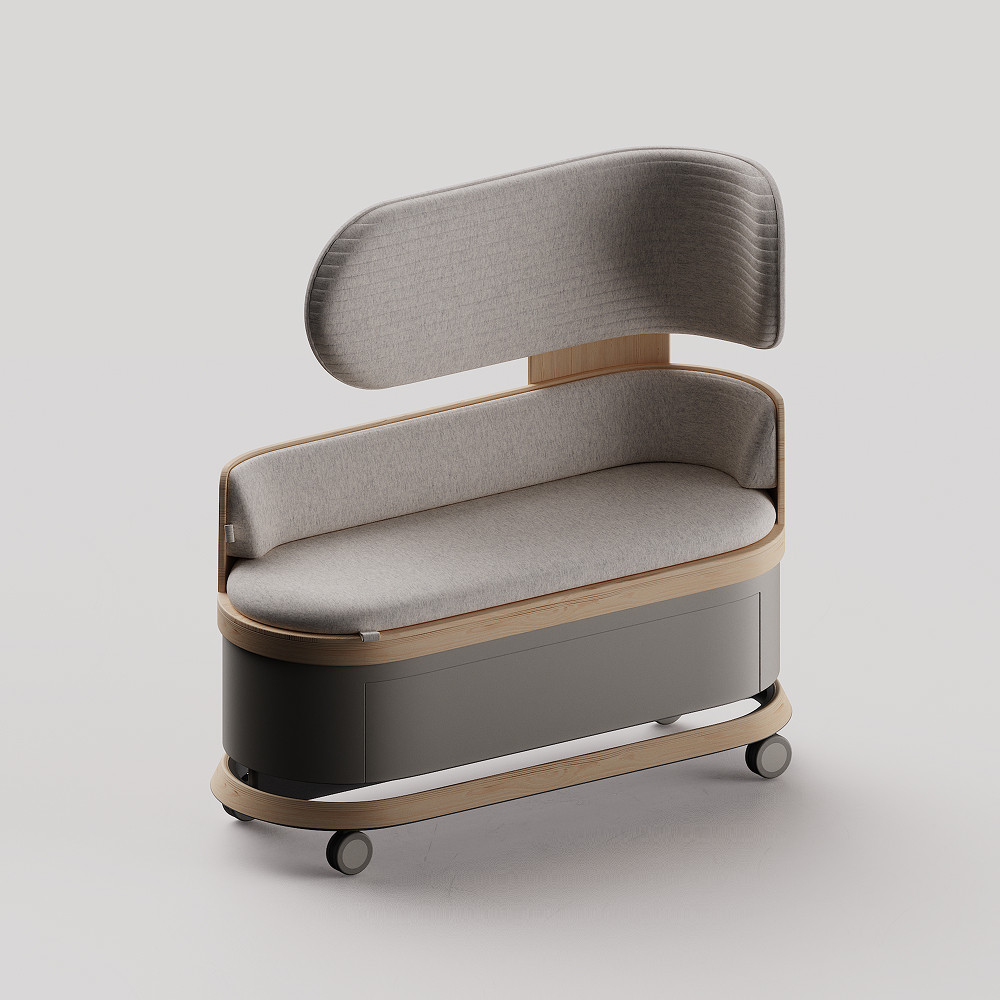
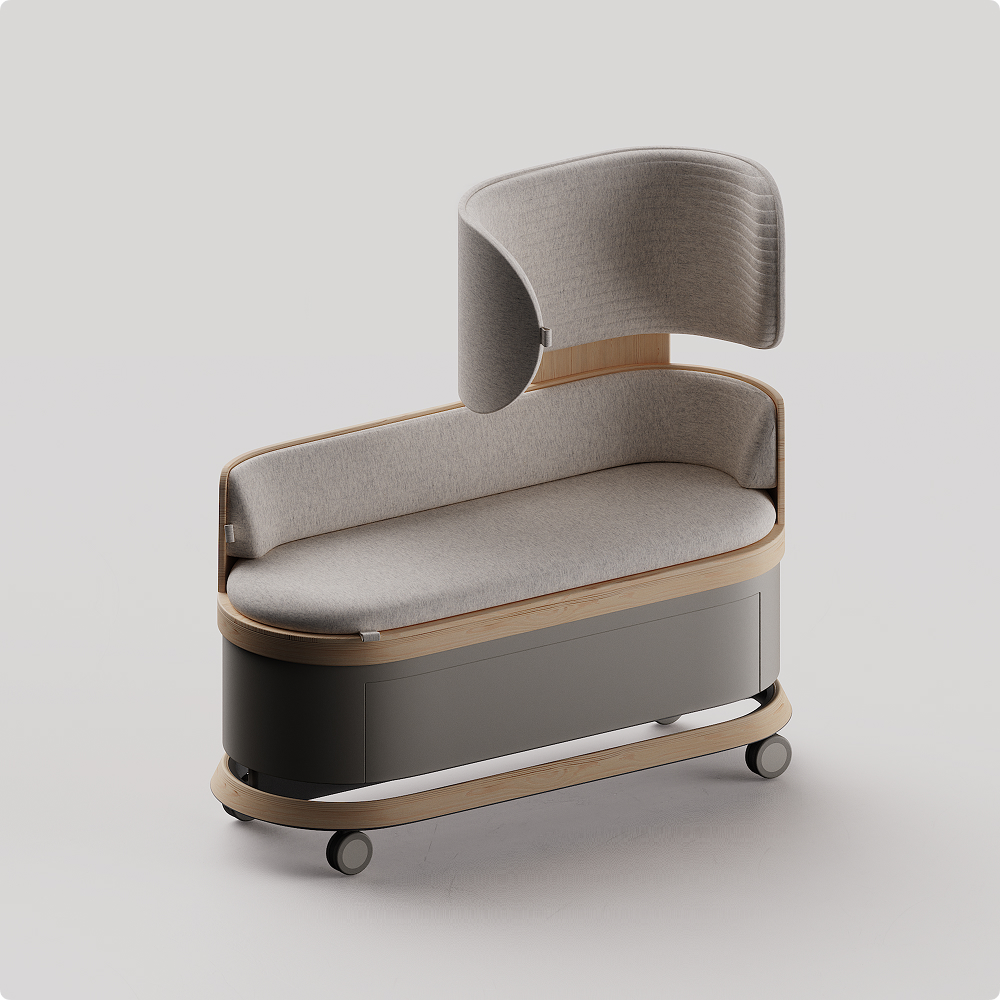
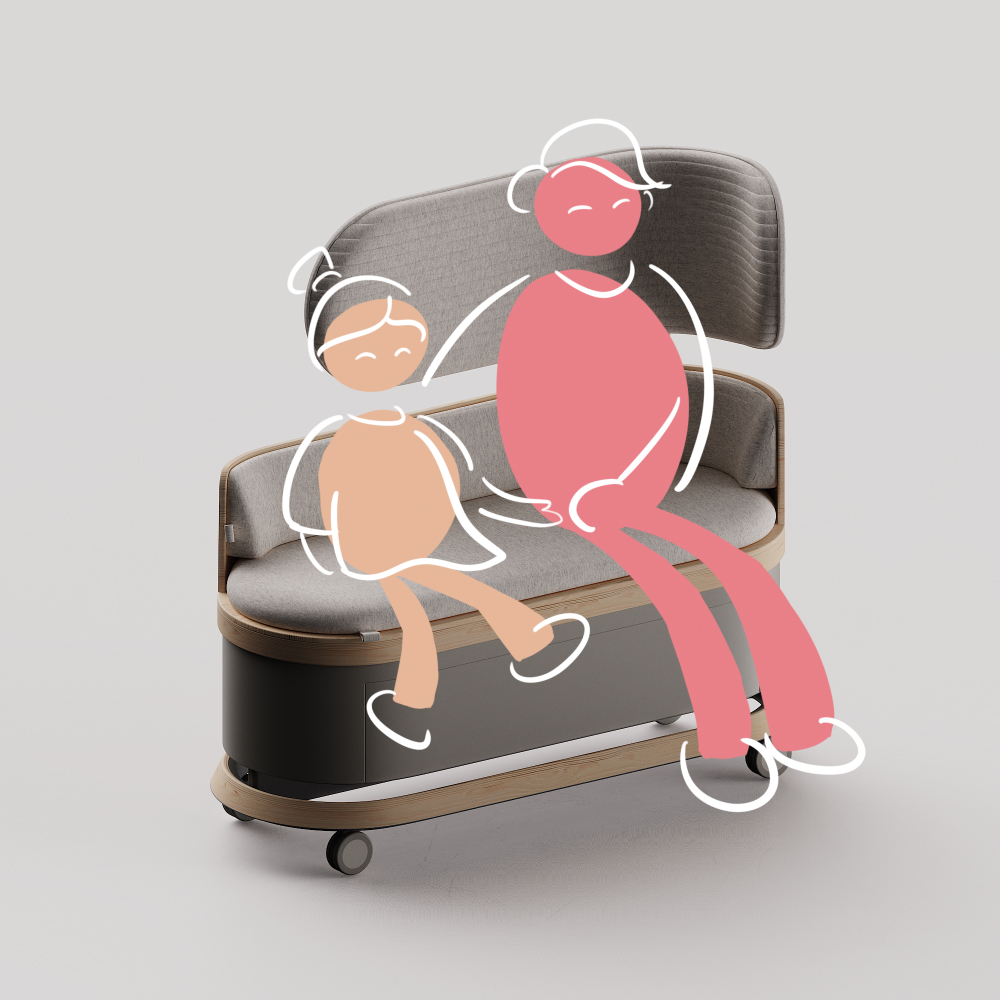
Chair and Bench
Seeing a family member in an ICU can be overwhelming. While the boundary between private and public blurs in the room, the chair provides privacy for intimate moments.
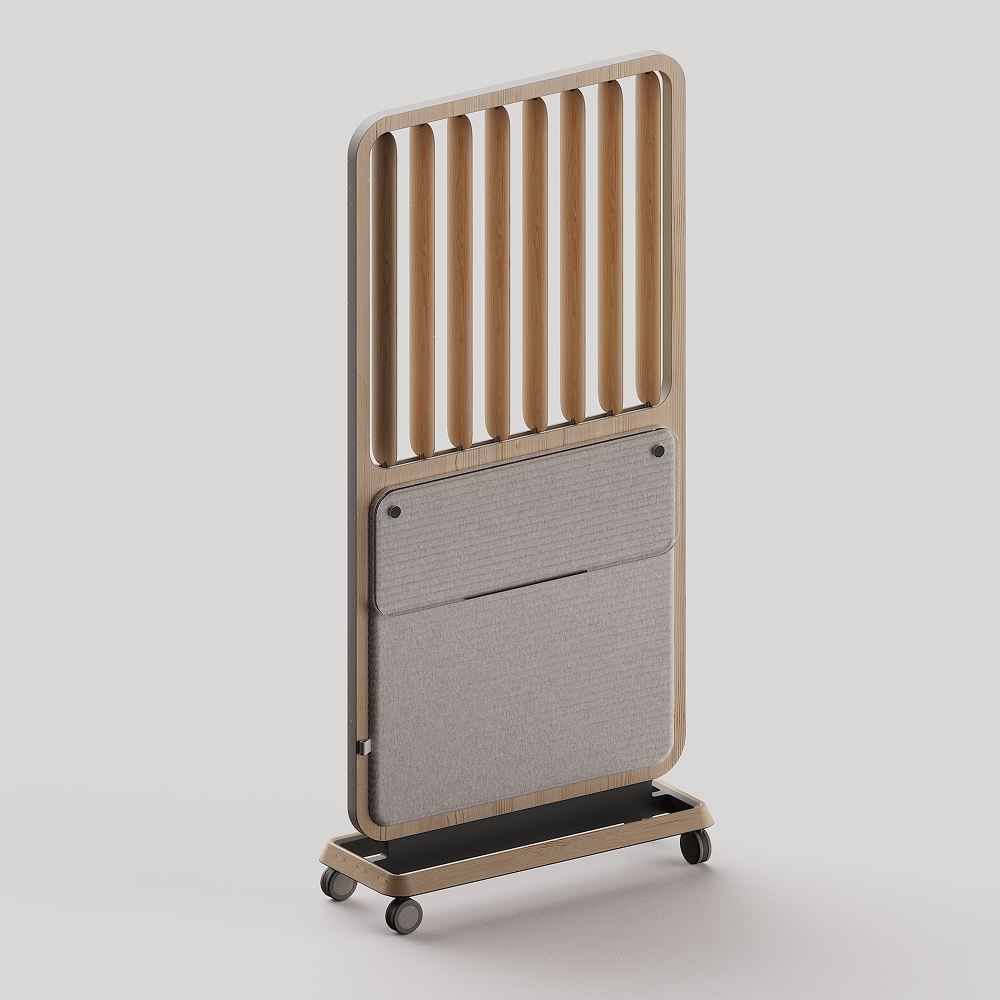
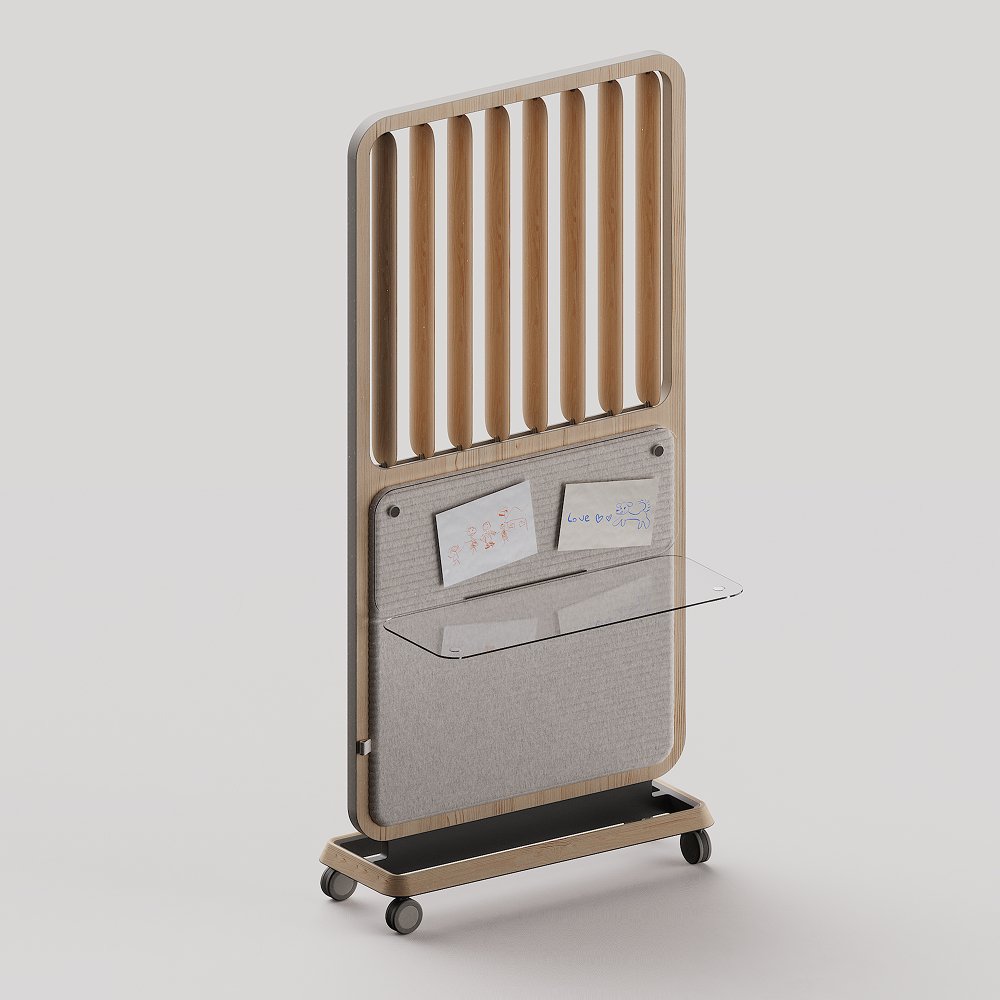
Divider
The memory board creates an opportunity to leave notes and other small memories, to keep the patient company, even when the relatives can’t be there - safely behind glass to guarantee clean-ability.
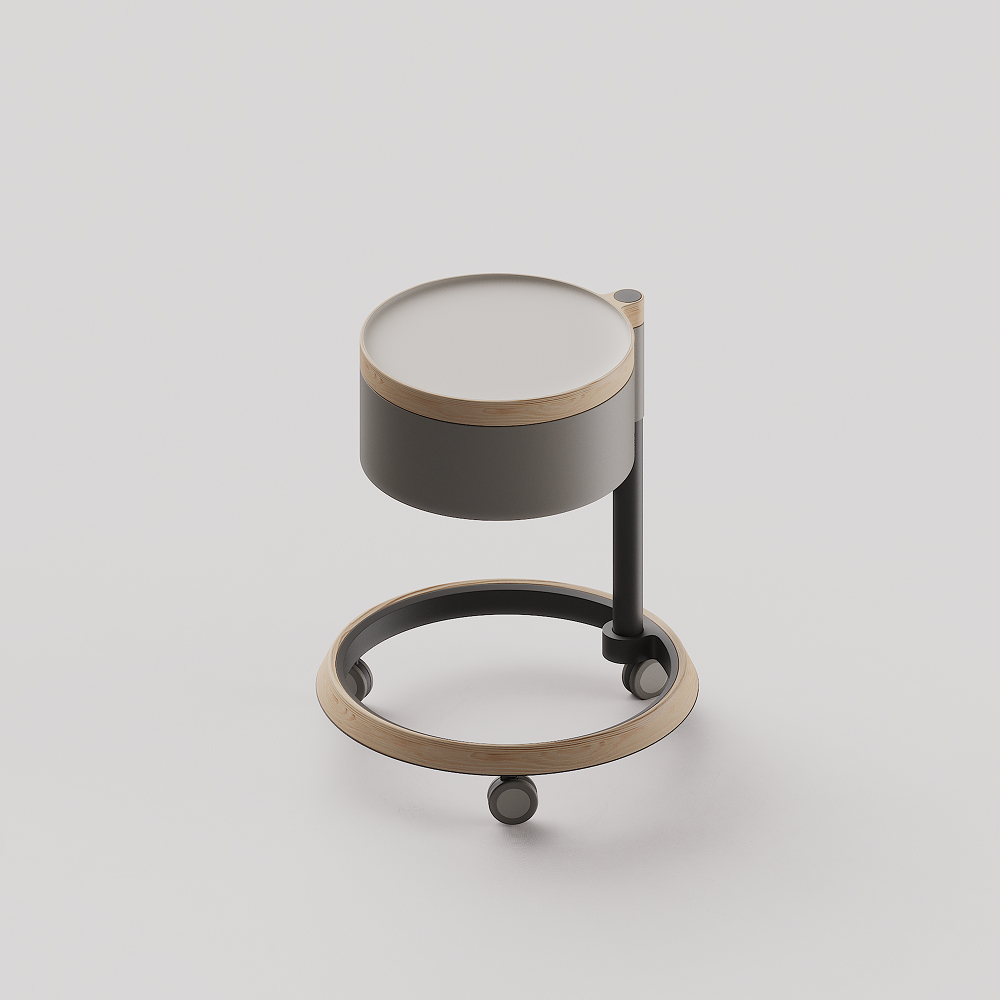
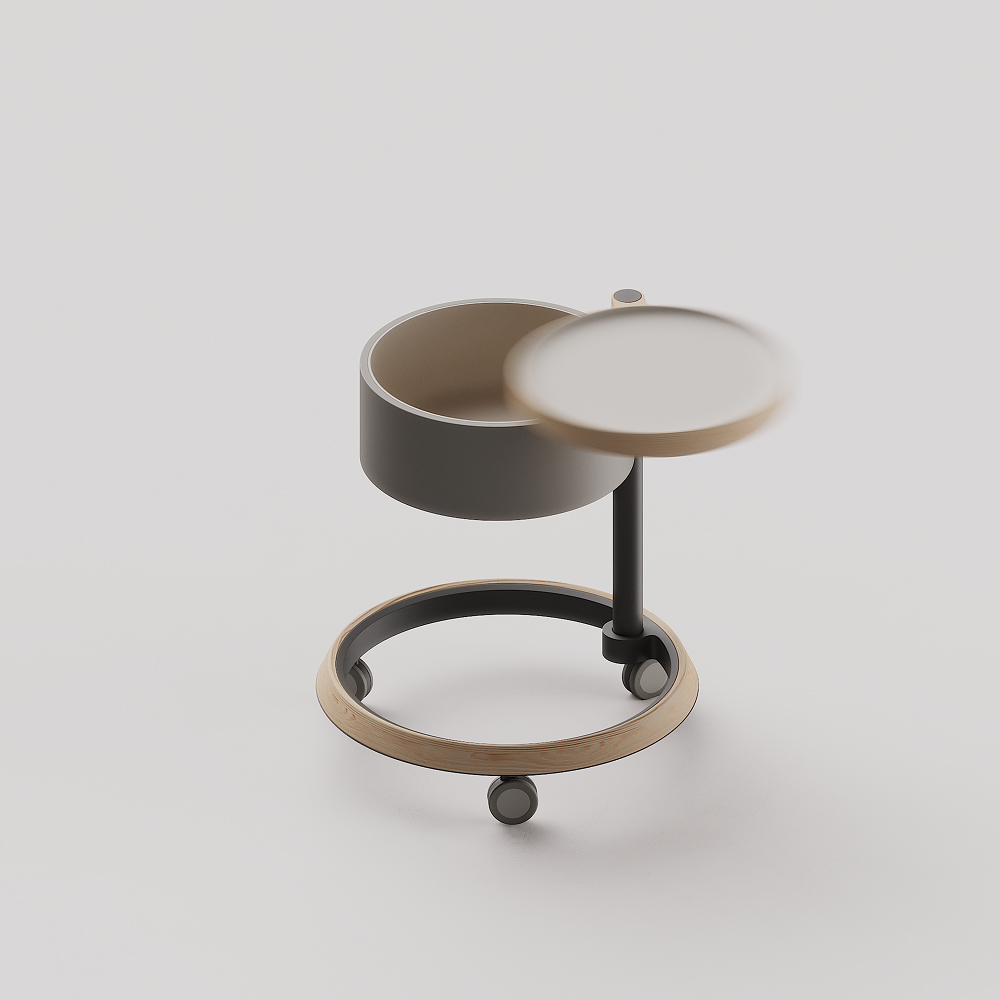
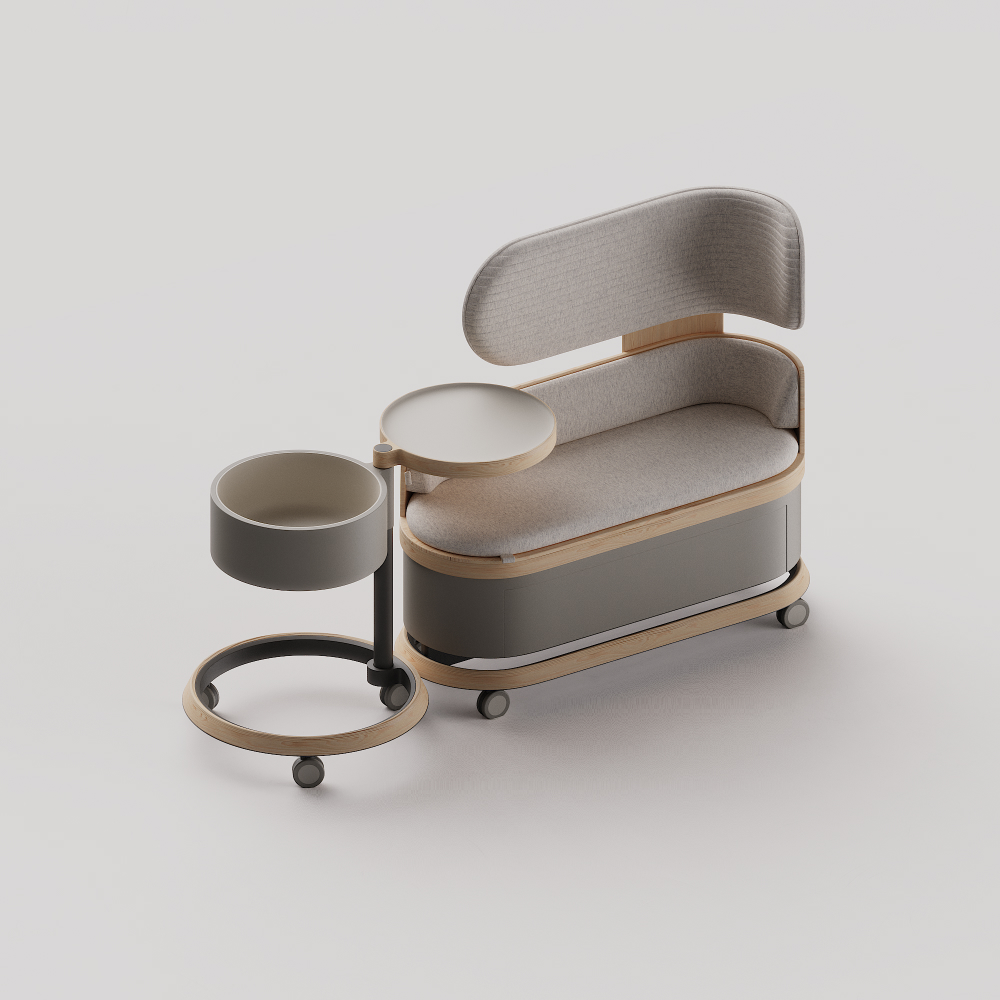
Care Table
A simple side-table, can be highly appreciated, to store important personal items and can provide relatives with tools for simple care giving tasks, to help them connect more closely with the patient.
The patients life - Leaving & Living again
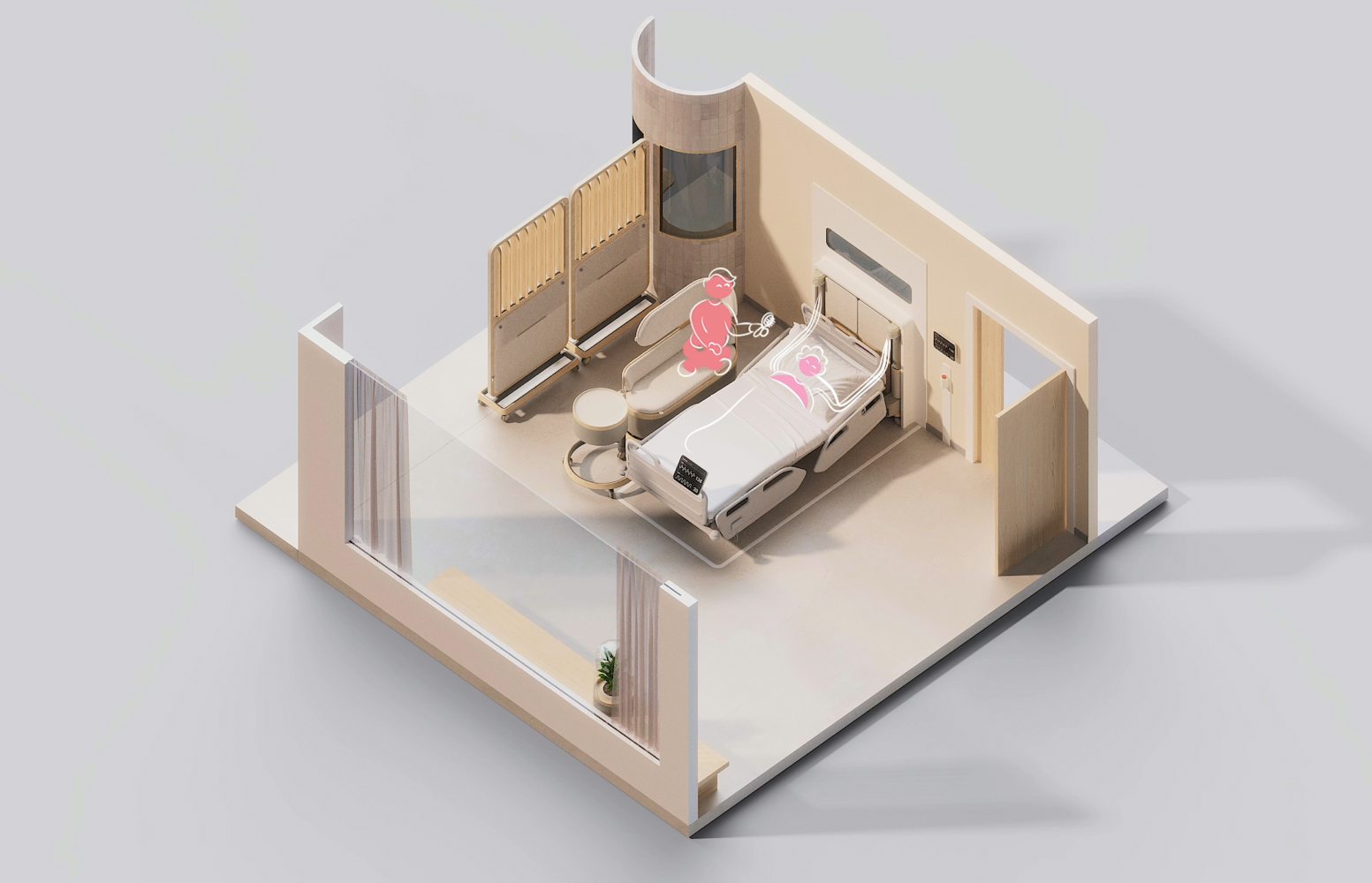
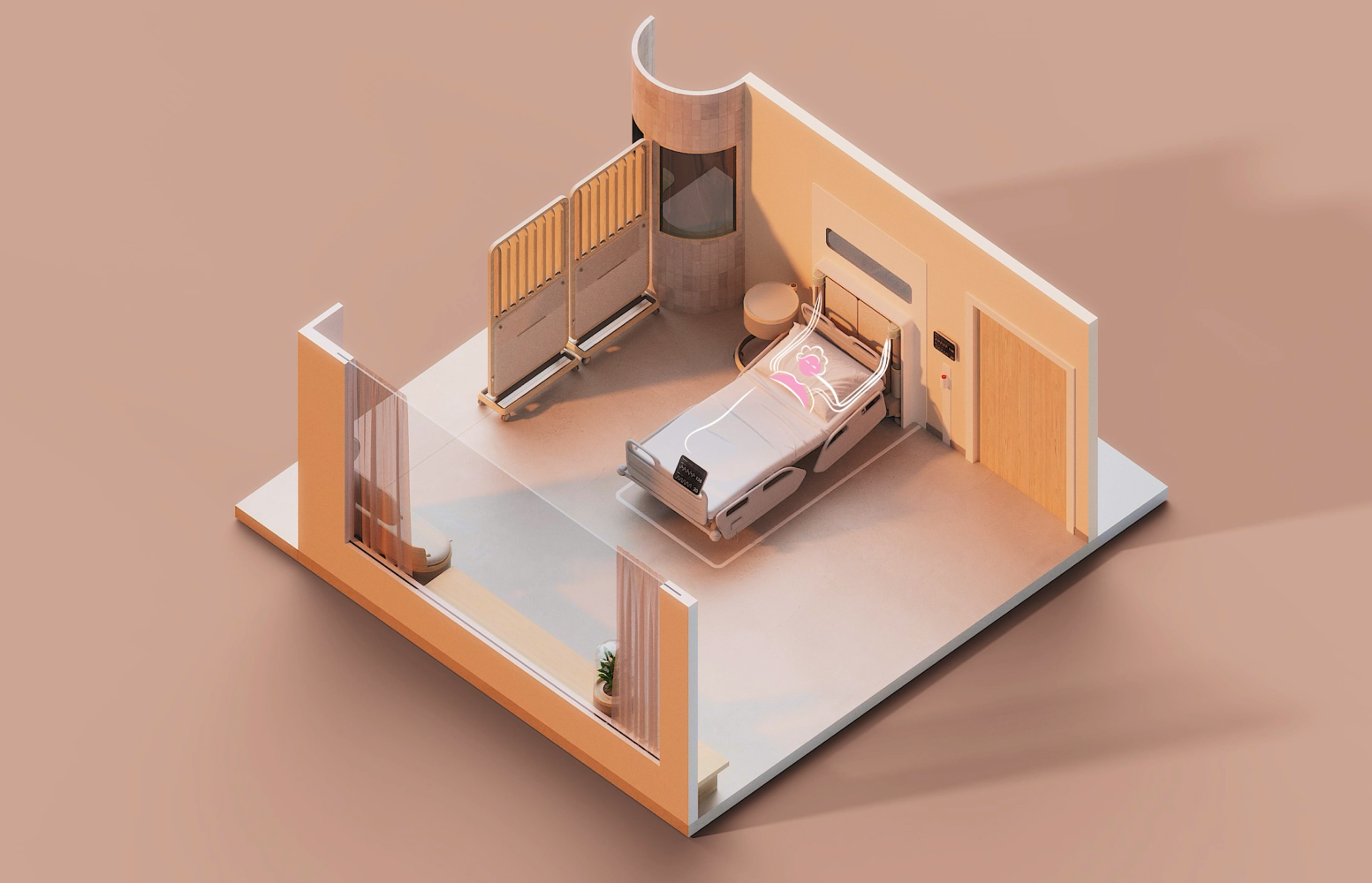
Mira at every step of the way
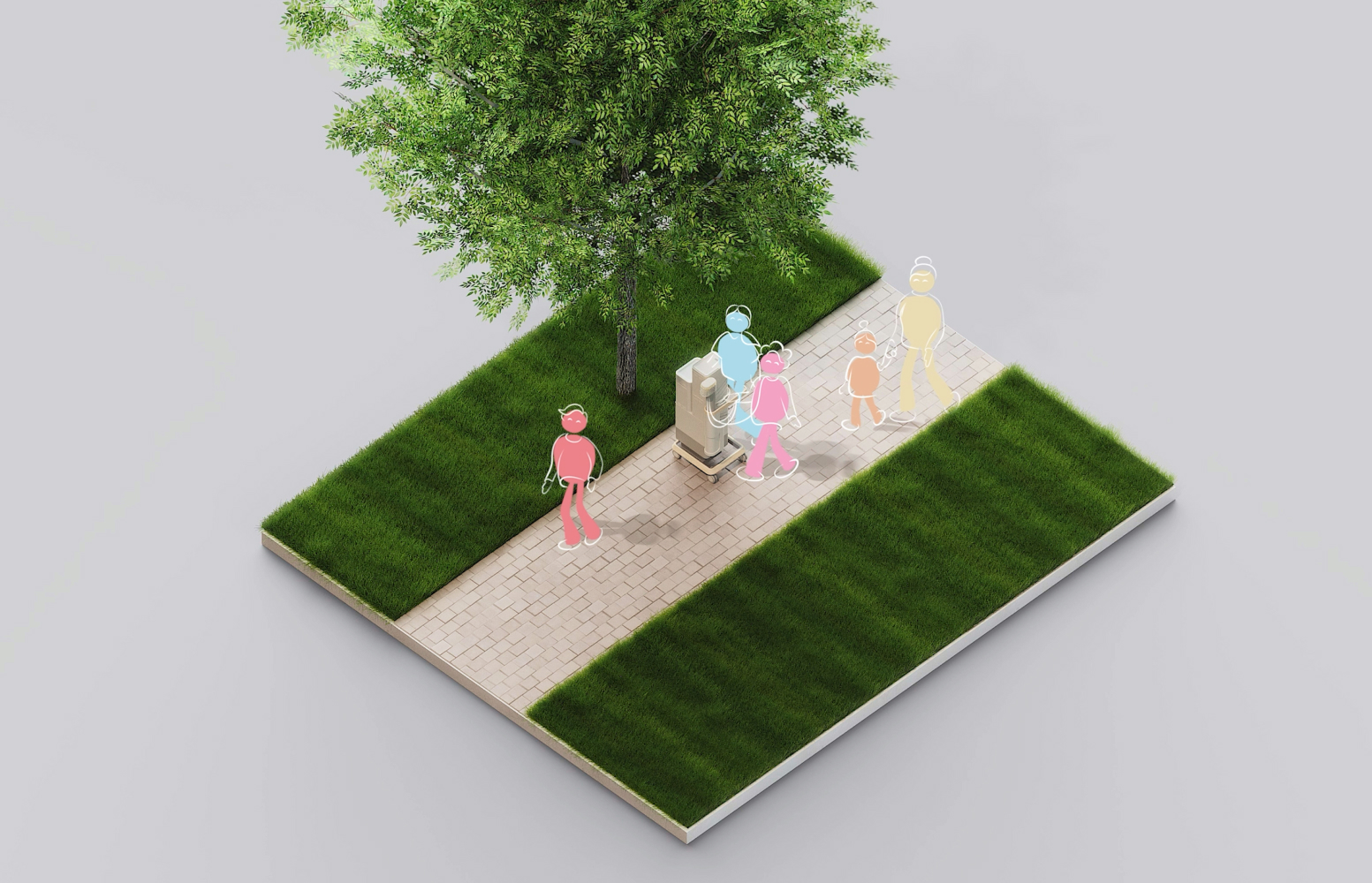
Not only does Mira support the patient throughout different stages of the day, but also progressing healing stages overall.
The modular patient hub can easily be detached from the bed. Once the patients needs less support and all the equipment fits on a single hub, the patient can take their first step back outside. The first steps back to life.
© Silvester Kössler
silvester@koe.design
+43 650 977 92 88